
Search
How to Start a Photography Business: What I Wish I Knew in the Beginning


Starting a photography business can feel like you need to have everything figured out before you can even begin. The perfect camera. The perfect website. A beautiful logo. A full portfolio. Thousands of followers. Expensive lenses. Perfect editing. A long list of clients.
You don't. When I started Serendipity Studios Photography, I didn't have everything figured out either. And years later, I can tell you that so much of building a photography business happens while you're building it. You learn by photographing families. You figure out what works by trying things that sometimes don't work. Your editing changes. Your pricing changes. Your brand evolves. Your confidence grows.
If you're sitting there with a camera thinking, I would love to turn this into a business, but I have no idea where to start, this is for you.
Here are the things I wish I knew in the beginning.
1. Learn Your Camera Before You Buy More Gear
One of the easiest traps to fall into as a new photographer is thinking better gear will automatically make you a better photographer. It won't.
Learning how to control the camera you already have will take you much further than constantly buying new equipment.
Start learning:
Aperture. Shutter speed. ISO. Focus. White balance. Light. Composition.
Take your camera out of Auto Mode and start experimenting with Manual Mode—even when it's frustrating. Photograph your kids. Your spouse. Your dog. Your coffee cup. Flowers in your backyard. Your friend who agrees to model for you. Shoot in different lighting conditions. Make mistakes. Look at your images afterward and figure out why something worked—or why it didn't. That's how you learn. And you absolutely don't need a $2,000 lens to begin.
One of my favorite recommendations for beginner Canon photographers is still the 50mm f/1.8, affectionately known as the Nifty Fifty. It's affordable, lightweight, and capable of creating gorgeous portraits. I actually wrote an entire guide about why I think it's such a great first lens, including the difference between the Canon EF and RF versions.
→ Read: Why the Nifty Fifty Is One of the Best Lenses for Beginner Photographers
2. Practice Before You Worry About Being Perfect
Your first photographs probably won't look like the photographs you're creating five years from now. They're not supposed to. One of the biggest things I wish new photographers understood is that your style develops through repetition. You need to shoot. A lot.
Try backlighting. Try direct light. Photograph during golden hour. Photograph in shade. Try different apertures. Photograph moving children. Photograph couples. Photograph families.
And then go home and edit those photographs. You'll slowly start discovering what you're drawn to. Maybe you love bold, colorful images. Maybe you love warm, moody photographs.
Maybe you're obsessed with movement. Maybe you love perfectly posed portraits.
Your style isn't something you choose from a Pinterest board one afternoon.
You develop it by creating.

3. Build a Portfolio Before You Have Clients
"But how do I get clients when I don't have anything to show them?" Almost every photographer runs into this. The answer? Create the work you want to be hired to photograph.
Ask friends or family members to model for you. Put together a styled session. Photograph a couple you know. Ask a family if they'd be willing to dress in a coordinated wardrobe and meet you for a sunset session. Don't just photograph anything for the sake of filling a website.
Be intentional. If you eventually want to photograph families in the Colorado mountains, create portfolio sessions with families in the Colorado mountains. If you want engagement sessions, photograph couples. If you want seniors, photograph seniors.
People need to see themselves in your work. Your portfolio teaches potential clients what they can hire you to create.
4. You Don't Need 10,000 Followers to Find Clients
I really want beginner photographers to hear this one. Followers don't equal bookings.
A photographer with 800 local, engaged followers can have a thriving business while someone with 30,000 followers struggles to convert those followers into paying clients.
Instead of obsessing over follower count, focus on getting your work in front of the right people.
Use Instagram.
Use Facebook.
Use TikTok.
Use Pinterest.
Build a website.
Start blogging.
Learn basic SEO.
And most importantly, make it incredibly easy for someone who loves your work to figure out:
Who you are. Where you're located. What you photograph. What your work looks like. How they can book you. Don't make potential clients hunt for that information.
5. Your Photography Business Needs to Be an Actual Business
This isn't the glamorous part of photography, but it's incredibly important.
Once you're accepting money from clients, you need to start thinking like a business owner.
Depending on where you live and how your business is structured, that can mean looking into things such as:
Business registration or an LLC
Local or state licensing requirements
Business insurance
Taxes
Bookkeeping
Separate business finances
Contracts
Permits for photography locations
Requirements vary by state, city, location, and business structure, so don't assume another photographer's setup automatically applies to you.
I also strongly recommend photographers look into professional organizations and insurance resources such as Professional Photographers of America (PPA).
Your camera might be the fun part. But protecting the business you're building matters too.
6. Please Use a Contract
If I could shout one thing from the rooftops to new photographers:
USE. A. CONTRACT.
Even if you're photographing someone you know.
A professional photography contract can establish expectations around things like:
payment, retainers, cancellations, rescheduling, weather, image delivery, copyright, model releases, editing, turnaround times and what happens if something unexpected occurs.
A contract isn't about assuming your client will cause problems.
It's about making sure everyone understands what they're agreeing to before the session happens. And please don't blindly copy another photographer's contract from the internet. Laws vary, and contracts should fit your actual business. Consider having your documents reviewed by an attorney familiar with businesses in your jurisdiction.
7. Create a Client Workflow Early
This will save you SO much stress later. Think about what happens from the moment someone discovers you until their final gallery is delivered. A simple workflow might look like:
Inquiry → Response → Booking → Contract → Retainer → Questionnaire → Session Prep → Session → Editing → Gallery Delivery → Follow-Up
You don't need a complicated system when you're starting.
You just need a consistent one. I use tools like ShootProof for parts of my photography workflow and gallery delivery, and having systems in place makes such a difference once you're juggling multiple clients. Start creating your workflow before you're overwhelmed with bookings. Future you will be very thankful.
8. Don't Be Afraid to Charge Money

Pricing can be terrifying in the beginning. New photographers often think:
"Who is going to pay me for this?" So they charge $50.
Then suddenly they're photographing, communicating with clients, driving to locations, paying for software, buying equipment, editing for hours, delivering galleries and realizing…
They barely made anything. Your session price isn't payment for the hour you're holding the camera. It also has to support the time and expenses required to operate your business.
That include equipment, insurance, software, taxes, editing time, travel, marketing, website costs, education, permits and all the administrative work your client never sees.
You may charge less while you're learning and portfolio building.
That's okay. But don't build your entire business around being the cheapest photographer.
9. Your Prices Are Allowed to Change
Your first pricing guide does not have to be your forever pricing guide.
As your skills improve, demand increases, expenses change and your client experience becomes stronger, your pricing will probably evolve too. Mine certainly has.
Instead of randomly choosing a number because another photographer charges it, learn your cost of doing business. Ask yourself:
How much does running my business actually cost?
How many sessions can I realistically photograph?
How much time goes into each client?
What do I need the business to earn?
Those questions give you a much stronger foundation for pricing than simply looking at what everyone else is charging.
10. Your Gallery Is Part of the Client Experience
The client experience doesn't end when you put your camera away. How you deliver photographs matters. Instead of emailing 75 gigantic image files or handing someone a USB drive and calling it a day, consider using a professional online gallery.
A beautiful gallery allows clients to experience their photographs, download them easily, share them with family and potentially order prints or products.
It's another small thing that makes your business feel like a business.
11. Back Up Your Photos. Seriously.
Please don't learn this lesson the hard way. Memory cards fail. Hard drives fail. Computers crash. Things happen. Create a backup system from the beginning.
And don't format a memory card simply because you've imported the session onto your computer. Have multiple copies of important client files and develop a system for when cards can safely be formatted. You can replace a camera.
You cannot recreate someone's wedding day or their baby's newborn session.
12. Stop Comparing Your Chapter One to Someone Else's Chapter Ten
Social media makes this SO difficult. You see a photographer with gorgeous images, a booked calendar, beautiful branding and thousands of followers.
What you don't see is the decade it may have taken them to get there.
Don't compare their business today to the one you started three months ago. Instead, look at your own progress. Pull up photographs you took six months ago. Then compare them to what you're creating today. That's the comparison that matters.
13. You Will Make Mistakes
You will. You'll choose the wrong camera setting. You'll underprice something.
Y ou'll forget something at home. You'll try a marketing strategy that completely flops.
You'll create an preset you think is AMAZING and look at it two years later wondering what on earth you were doing. That's part of becoming a photographer and a business owner.
The goal isn't to build a business where you never make mistakes. The goal is to learn from them.
14. Invest in Educ ation Before Constantly Investing in Equipment
Another $2,000 lens isn't always the answer. Sometimes what will actually move your photography forward is understanding:
light, posing, composition, camera settings, editing, marketing, SEO, client experience or business finances.
Gear is exciting.
Education changes how you use the gear you already own.
That distinction can save you a LOT of money in the beginning.
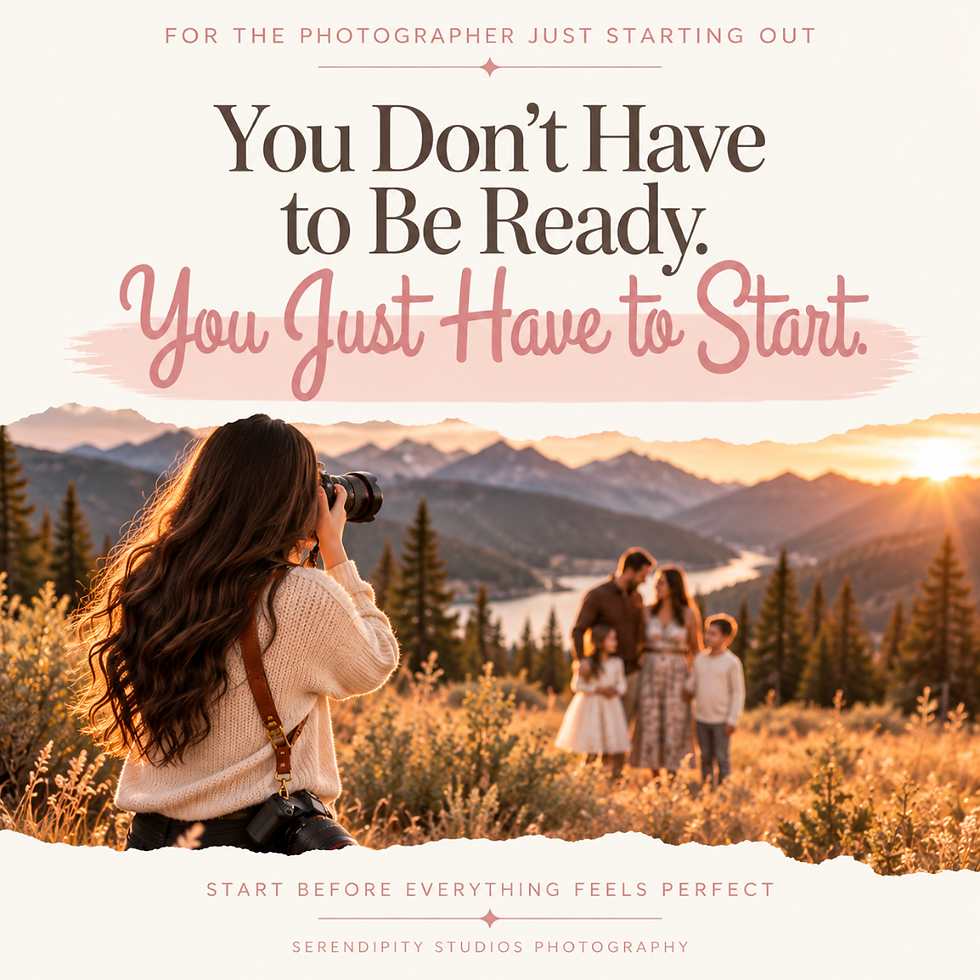
15. You Don't Have to Wait Until You're "Ready"
This might be the biggest lesson of all. You can spend forever waiting. Waiting until your portfolio is perfect. Waiting until you buy another lens. Waiting until your website looks better.
Waiting until you're more confident. Waiting until you have more followers.
Waiting until you feel like a "real photographer." At some point, you have to begin.
Start small. Learn. Practice. Build your systems. Protect your business. Improve your craft. And keep going. Confidence doesn't always come before you do something.
Sometimes confidence comes because you did it.
If I Were Starting My Photography Business Again Today…
I'd keep it simple.
I'd learn my camera before buying a ton of equipment. I'd get comfortable shooting in Manual Mode. I'd buy a solid beginner lens. I'd intentionally build a portfolio. I'd create a legal business structure appropriate for where I live. I'd get insurance. I'd use contracts. I'd establish a client workflow. I'd create a professional website and gallery experience.
And then?
I'd start shooting.
Because nine years into Serendipity Studios Photography, one of the biggest things I've learned is that you don't build a photography business by waiting until everything is perfect.
You build it one session, one mistake, one client and one lesson at a time.
And if you're at the very beginning right now?
I'm cheering you on.
This is just the beginning!
Alexandria
📸 Coming Next in the Starting Your Photography Business Series
Manual Mode Made Easy: The 3 Camera Settings Every New Photographer Needs to Know
We'll break down aperture, shutter speed and ISO without making it feel like you're studying for a physics exam. 😂


Comments